2024
Amazon Kindle Re-imagined
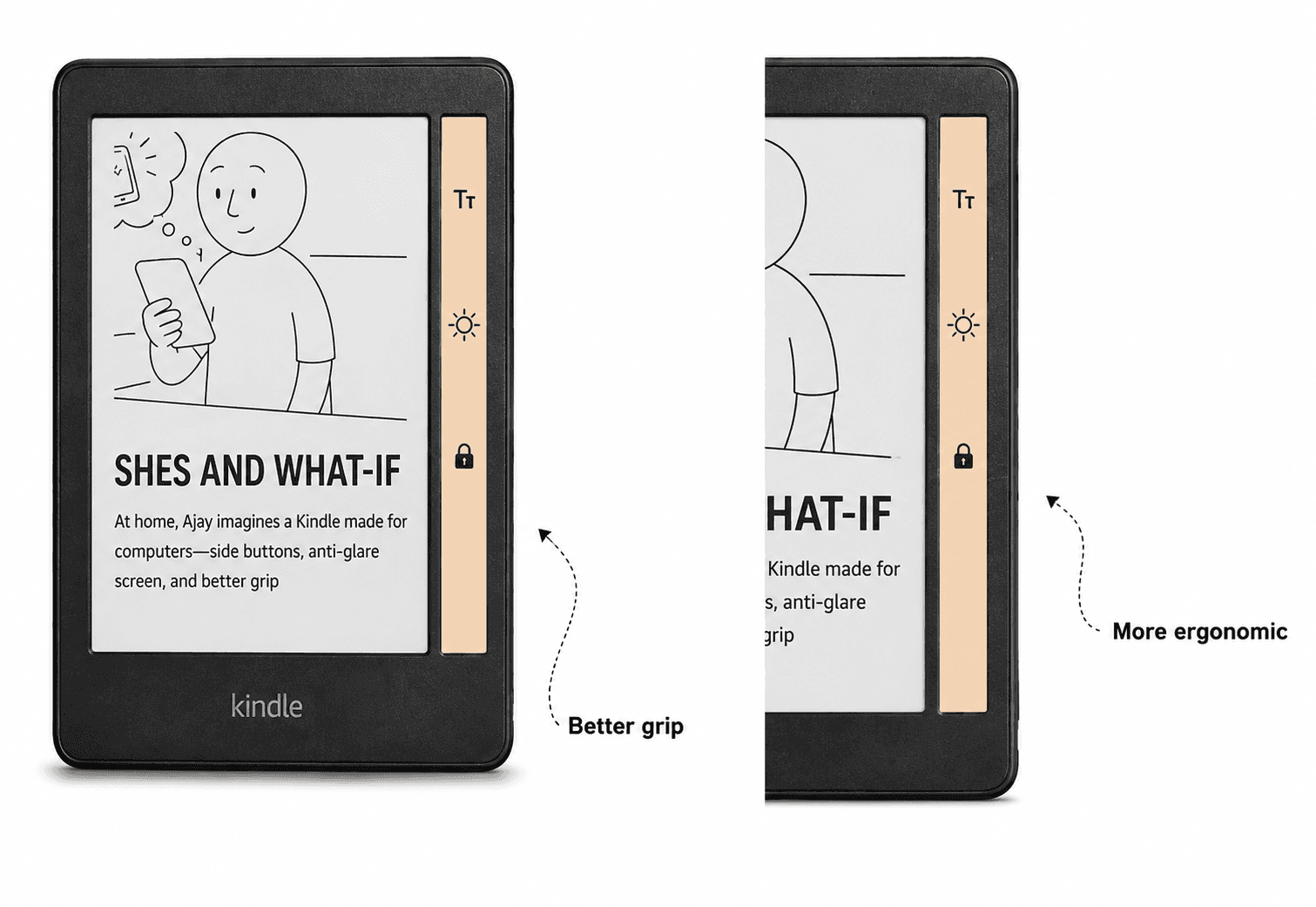
A redesigned Kindle experience focused on making one-handed reading easier, more comfortable, and accessible through improved controls, navigation, and interaction.

Overview
Amazon Kindle Re-imagined explores ways to improve the reading experience by making Kindle more intuitive and user-friendly. Through user research, journey mapping, information architecture, and usability testing, we identified challenges related to navigation and interaction. The project rethinks the overall experience to create a simpler and more seamless way for users to interact with the device and its features.
Problem
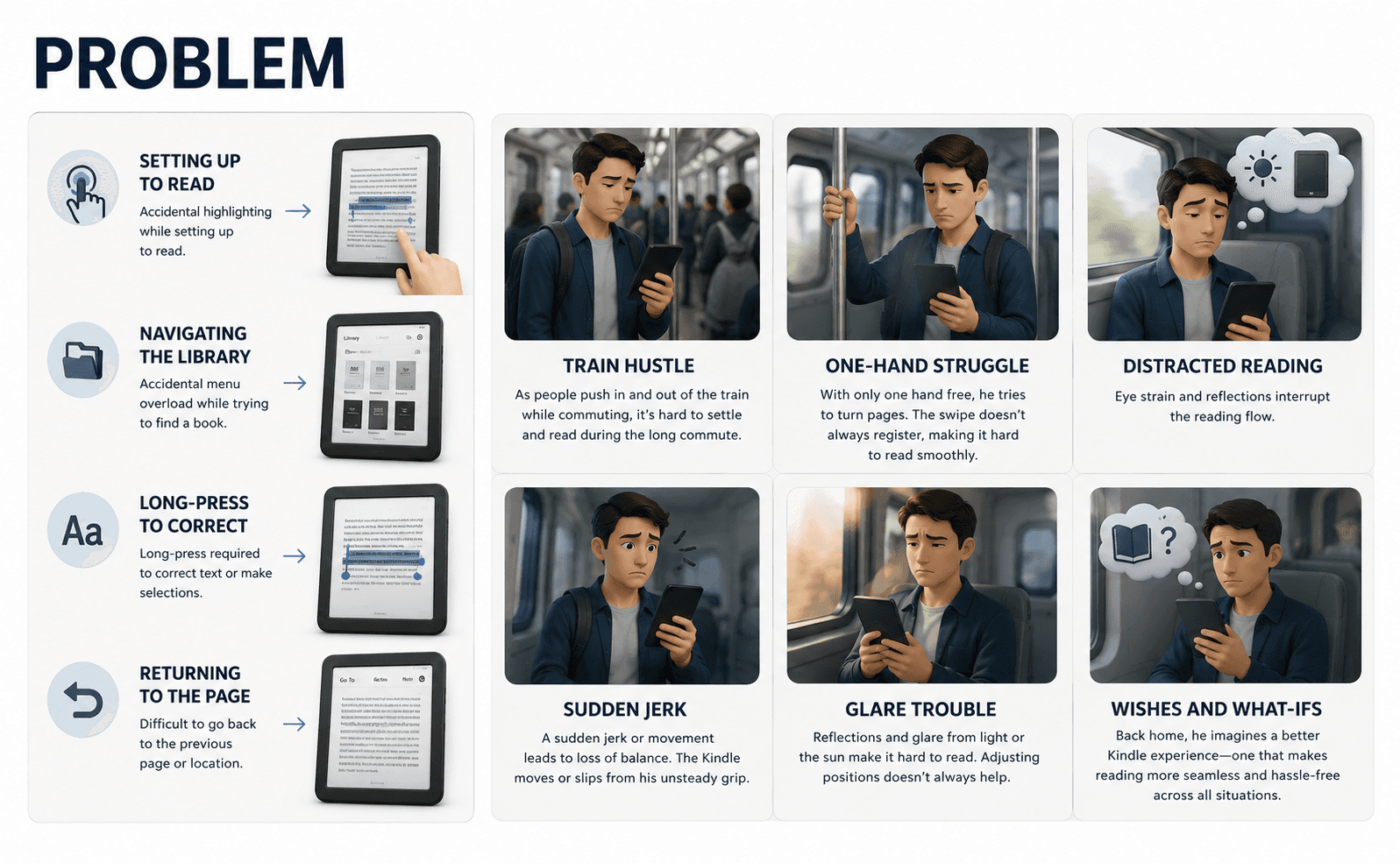
How might we improve the Kindle reading experience for users by reducing accidental interactions, simplifying navigation, and making the device easier to use in different real-life situations such as commuting, reading with one hand, and dealing with screen glare?
User persona and journey mapping
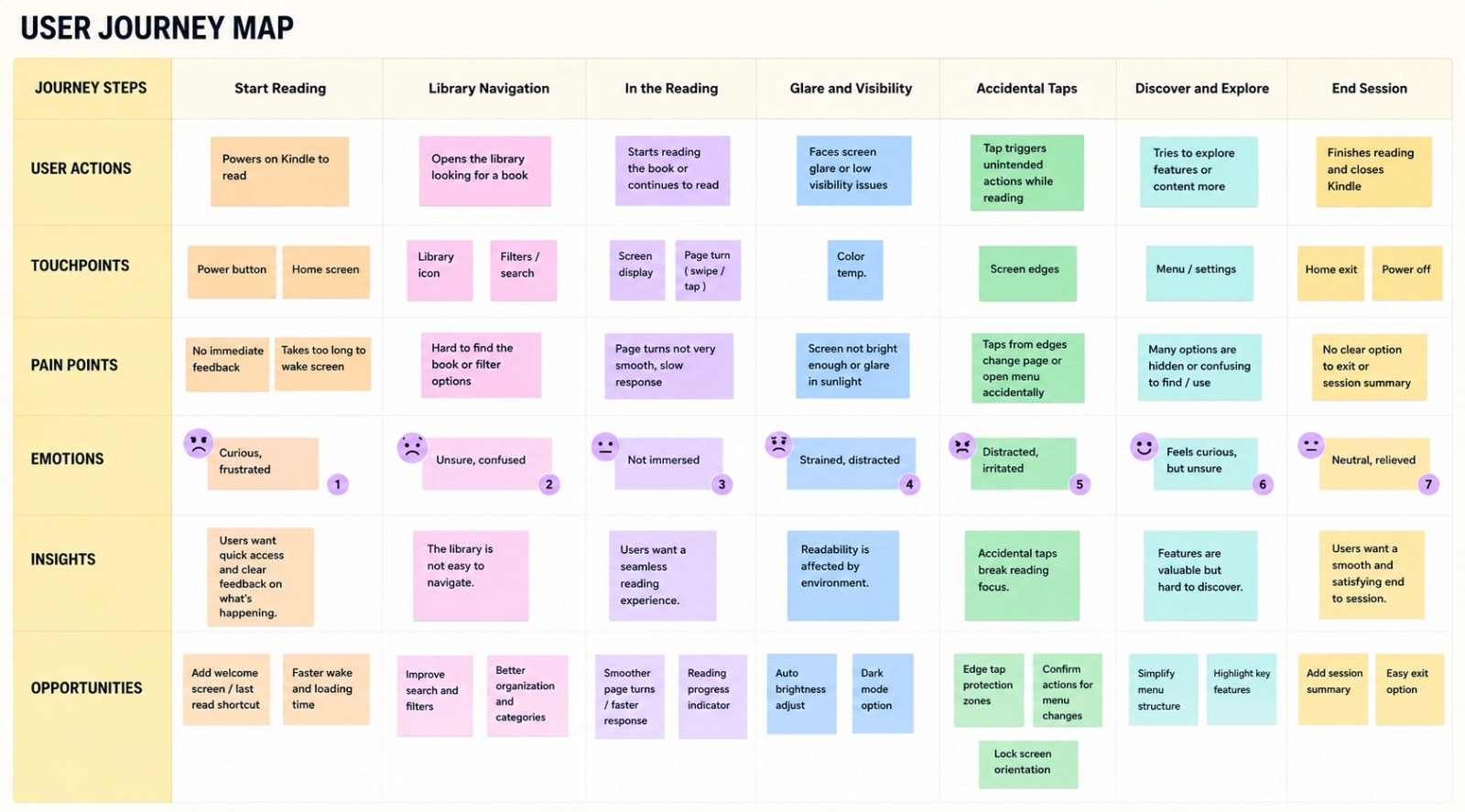
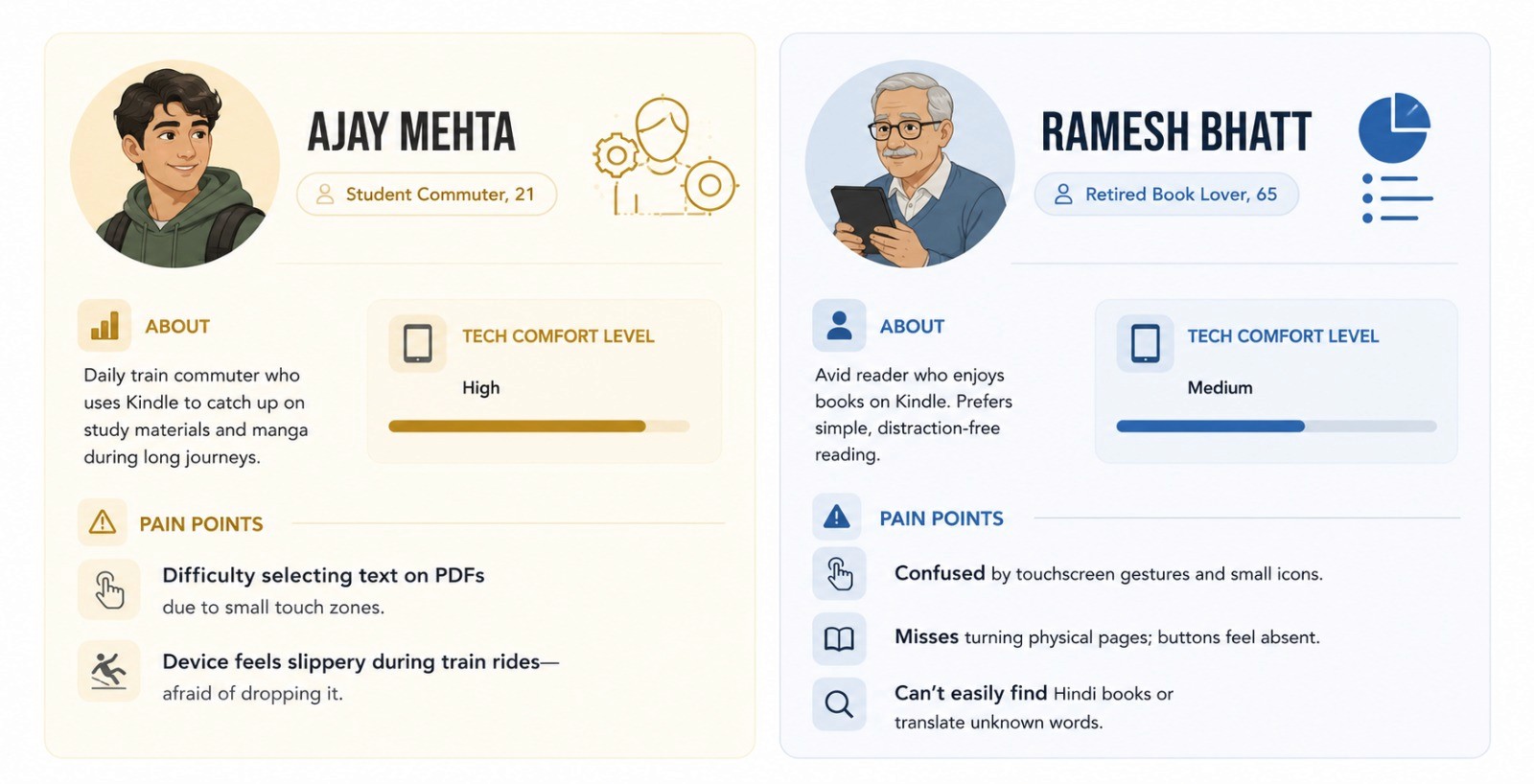
To better understand the users and their reading experiences, we created user personas and journey maps. This helped us identify different user needs, behaviours, pain points, emotions, and challenges across their interaction with the Kindle. By mapping their journey step by step, we were able to uncover key opportunities to improve the overall reading experience.
journey mapping
User persona
Information Architecture
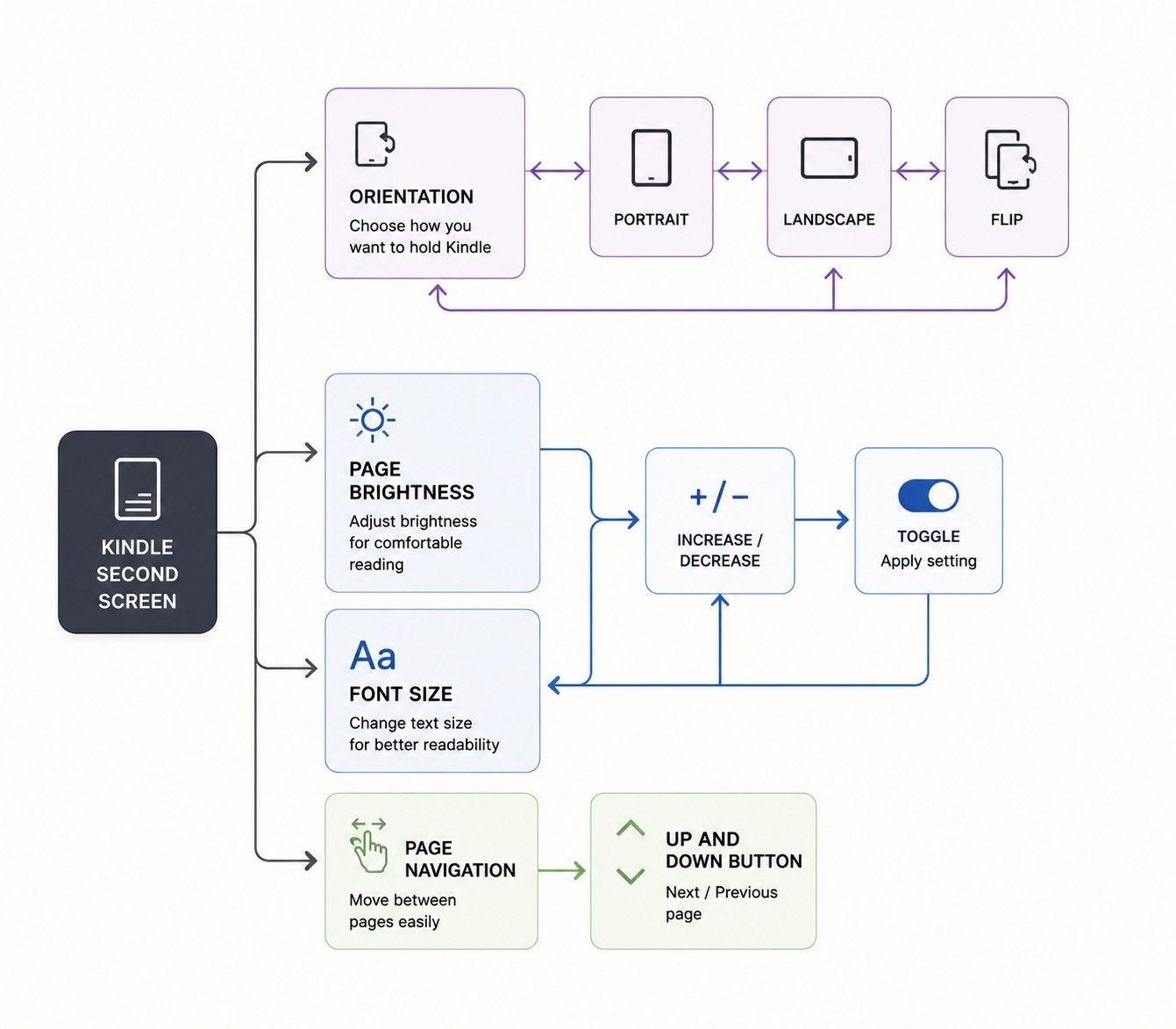
The Kindle second-screen features are organised into clear categories based on their purpose, including orientation, brightness, font size, and page navigation. This structure makes key controls easier to find and access, allowing users to adjust their reading experience with minimal interruption.
From Sketches to Prototypes: Shaped by Feedback
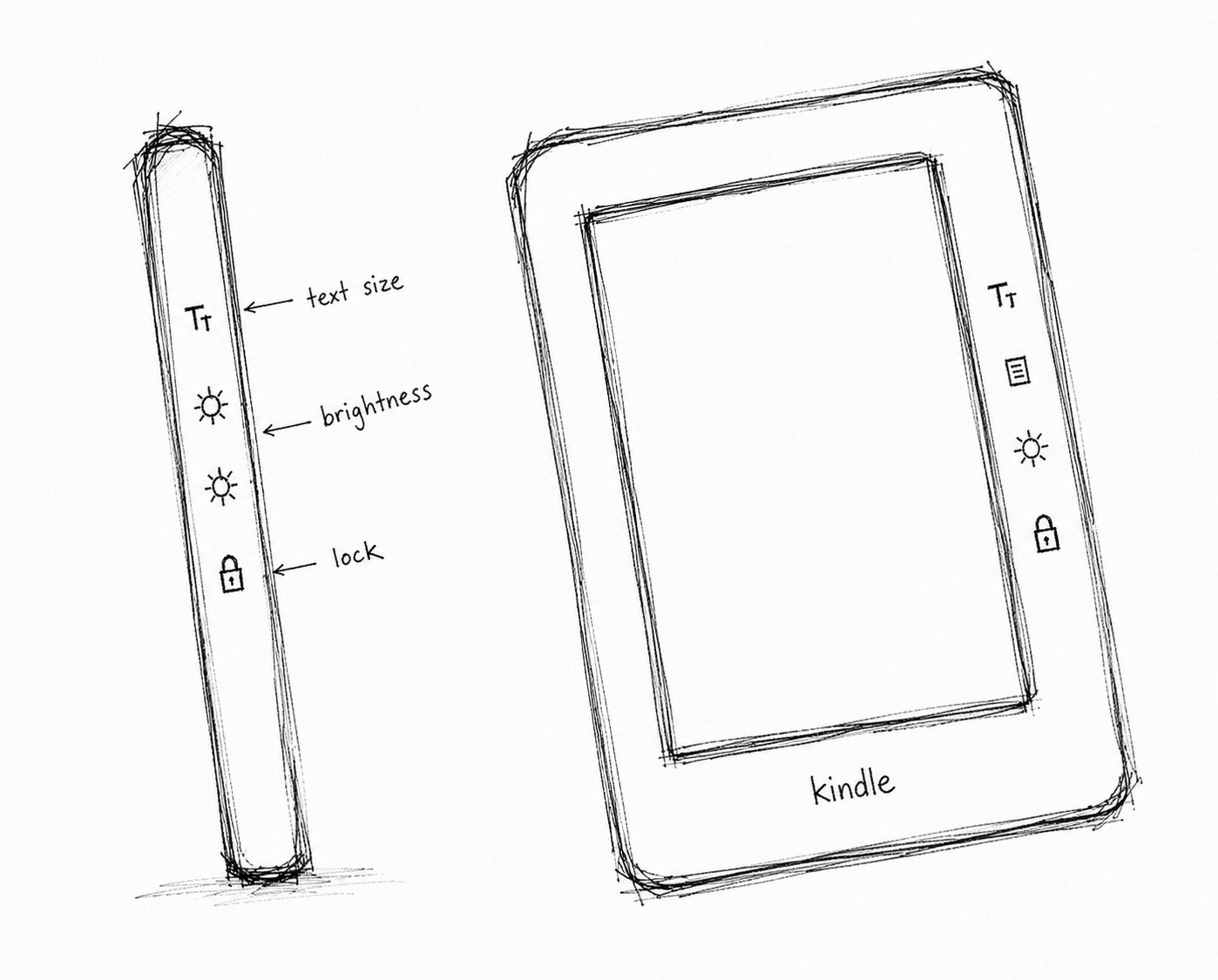
Sketch
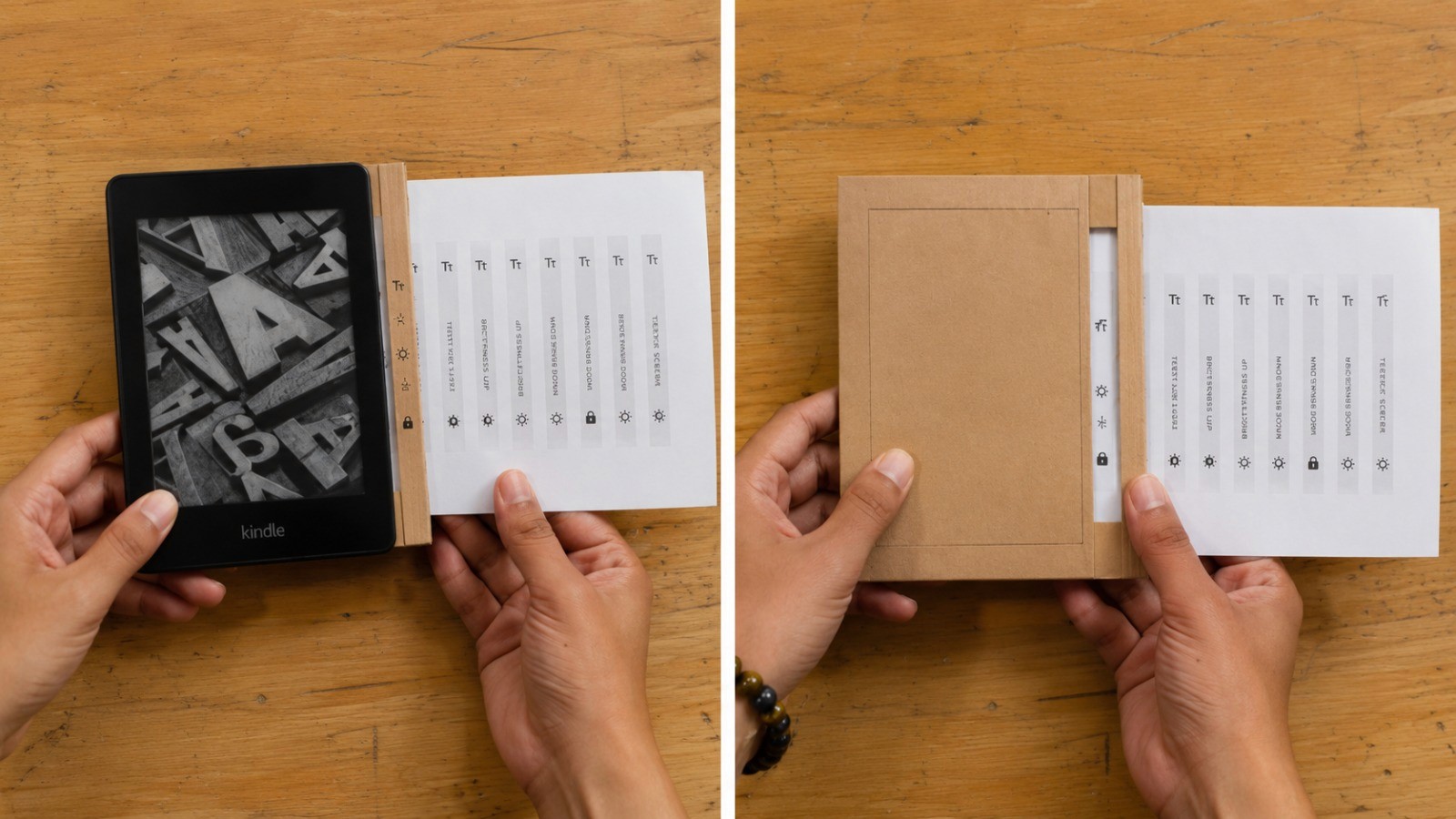
Prototype
Feedback
Testing the prototype gave us valuable insights into how users interacted with the design. Users appreciated the button placement and accessibility for both left- and right-handed use. Their feedback also helped us identify areas to refine, making the prototype more ergonomic, intuitive, and easier to use.
Final Design